Hello! This is the editorial team at DesignToolMark.
As a platform dedicated to curating the world’s most cutting-edge design tools and resources, we’ve been closely monitoring how AI is reshaping creativity. This week, a massive update to Stitch from Google Labs sent ripples through the design community—and even caused a noticeable dip in Figma’s (FIG) stock price.
Today, we’re breaking down why this new era of "Vibe Design" is more than just a buzzword; it’s a fundamental shift in how we build digital products.
🚀 Welcome to the Era of "Vibe Design": Deep Dive into Stitch
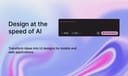
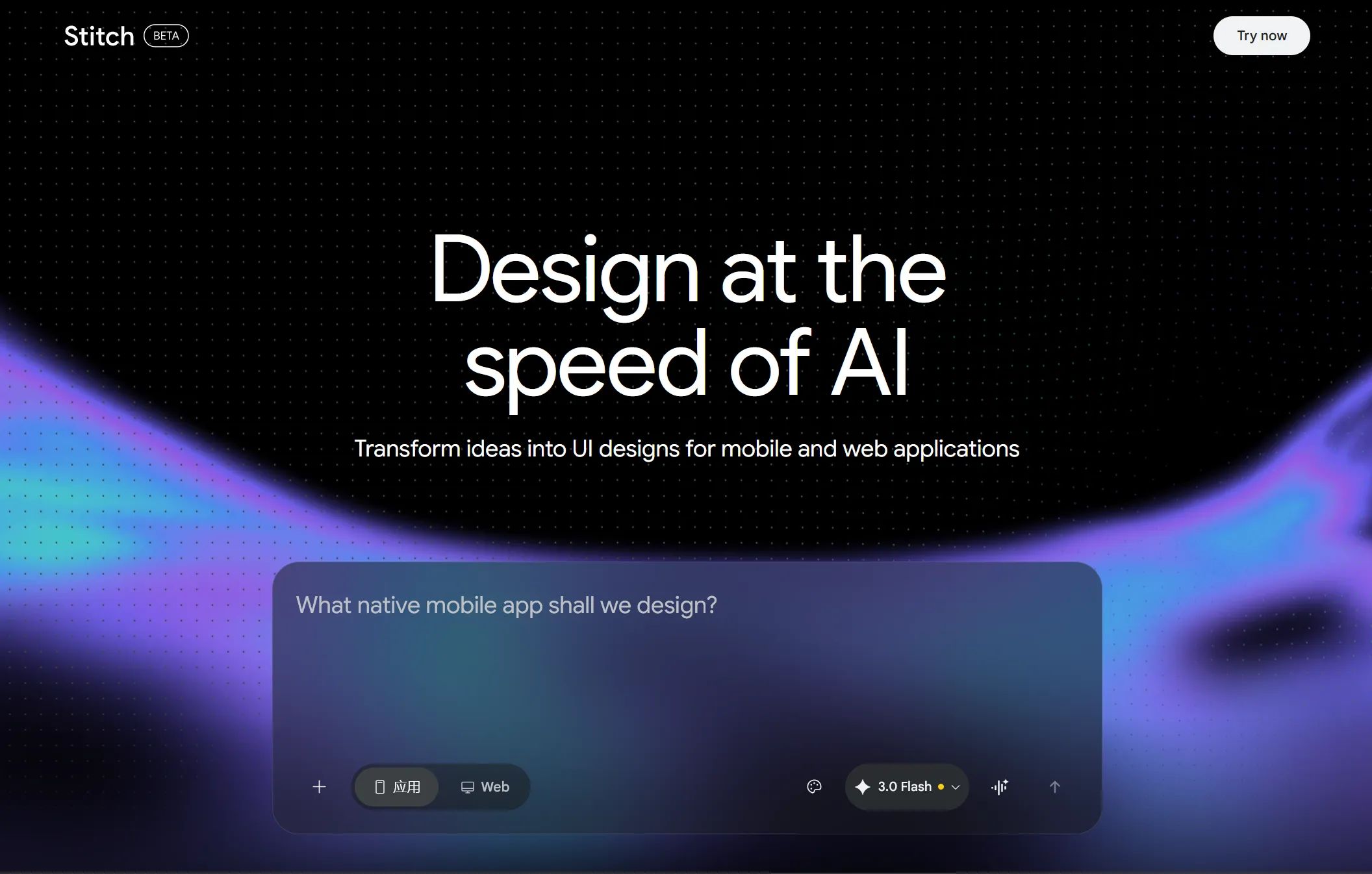
On March 18, 2026, Google Labs released a major overhaul of Stitch. It’s not just an incremental feature update; it introduces a paradigm shift: Vibe Design.
In traditional tools, we start with wireframes, alignment, and pixel-pushing. In the new Stitch, design starts with intent.
1. What is Vibe Design?
Imagine no longer reaching for the rectangle tool. Instead, you talk to Stitch as if you’re briefing a Senior Designer:
"I want a minimalist SaaS dashboard with the 'breathing room' of an Apple site, but with a color palette inspired by classic Swiss Style, using a deep International Klein Blue as the primary accent."
Stitch doesn't ask you where to put the buttons; it generates a cohesive, high-fidelity UI that aligns with that specific "Vibe." It transforms the creator from a "pixel pusher" into an "Aesthetic Curator."
2. Infinite AI Canvas: Design Without Borders
The update ditches the limitation of single-page artboards for an Infinite AI Canvas:
- Multimodal Context: You can drag screenshots, reference images, or even snippets of product logic code directly onto the canvas. Stitch treats these as context to ensure the generated UI is logically consistent.
- Parallel Exploration: Using the built-in Agent Manager, you can generate three entirely different design directions simultaneously on the same canvas for instant comparison.
3. "Talk, Don’t Touch": Voice Canvas Interaction
This is the feature that stunned our editorial team. You can give verbal commands directly to your workspace:
- "Change this top navigation to a sidebar."
- "Give me three mobile responsive variants for this section." The AI agents respond in real-time, modifying the canvas as you speak. It makes brainstorming and execution happen at the same speed.
4. The Bridge to Production: DESIGN.md
For those focused on implementation, DESIGN.md is the true game-changer. It’s an AI-friendly Markdown format used to define design systems. This file allows you to sync the styles generated in Stitch directly into your development environment, bridging the final gap between design and code.
📈 Industry Tremors: The Signal Behind Figma’s Stock Dip
Following the Stitch announcement, industry giant Figma (FIG) saw its stock price face downward pressure. While Figma remains the king of collaborative drawing, Stitch’s arrival has forced the market to reconsider: When UI can be "Vibed" into existence, does the traditional "manual-drawing" and "seat-based" model still hold absolute power?
This release signals that future design tools won't just be brushes; they will be agents that understand human intent.
💡 Final Thoughts: Taste is the New Moat
At DesignToolMark, we see this as a qualitative leap in tooling. Stitch isn't here to replace designers; it’s here to liberate us from tedious style adjustments so we can focus on high-level product logic and brand storytelling.
As the technical barrier to entry is lowered by AI, "What is good taste?" and "How do we define a product’s soul?" will become the true differentiators for creators.
Are you ready to "Vibe" your next project into reality?